
OUR DEBURNING SOLUTIONS
Deburring is a finishing process used to remove burrs, excess metal, irregularities, or sharp edges that often form on the edges or surfaces of parts after laser cutting, plasma cutting, and punching.
To remove these undesirable features from parts without leaving residue, this operation is performed using abrasive belts, abrasive discs, Scotch-Brite brushes, deburring belts, or multidirectional abrasive flap brushes.
Discover our range of machines for efficient and high-performance deburring
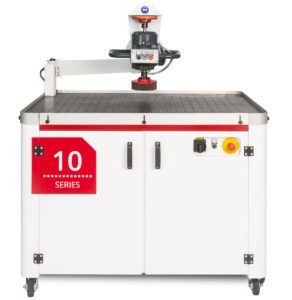
Series 10
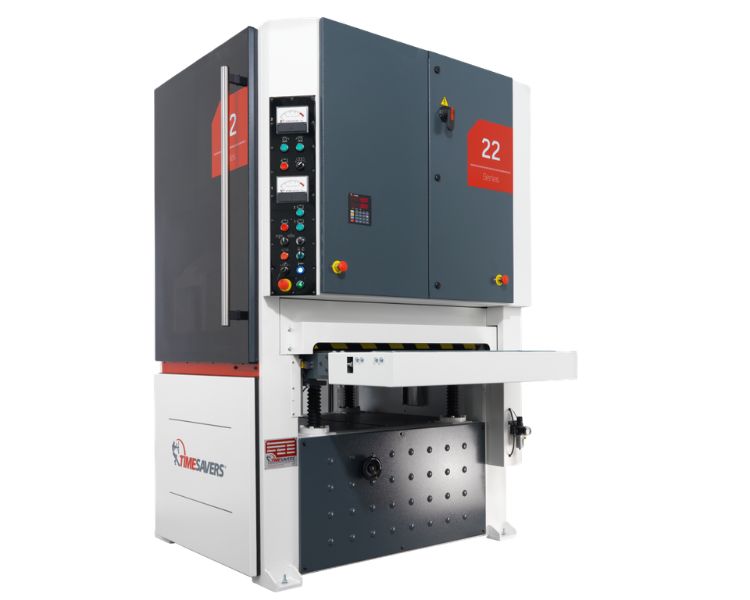
Series 22
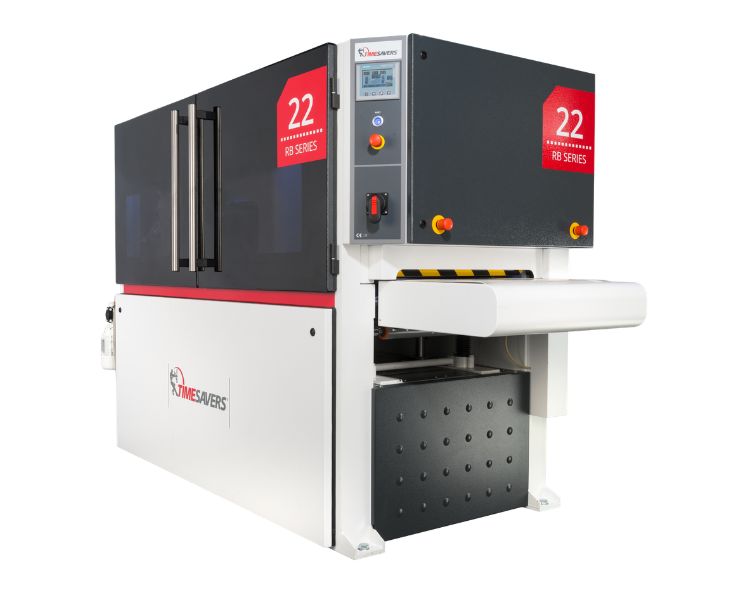
Series 22 Rb
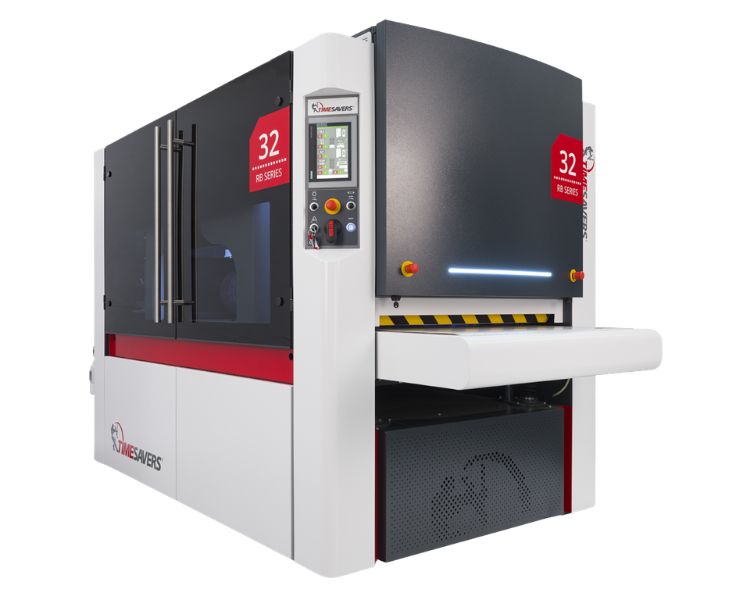
Series 32 Rb
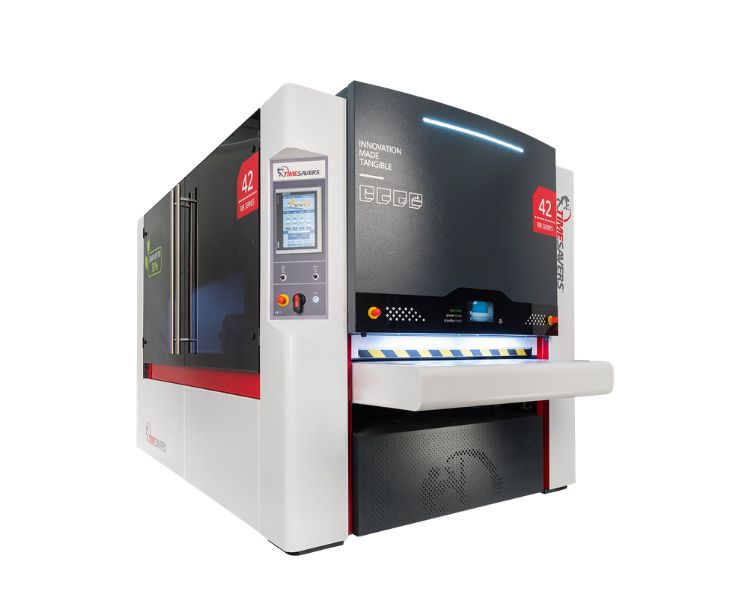
Series 42 Rb
Spare parts
Find the spare parts that fit your machines
Access spare parts
Turnkey solutions
Optimize your industrial processes with complete and high-performance integrated systems
Services
Our team supports and assists you to ensure the efficiency and sustainability of your installations.
News & Events
Meet our experts and discuss your projects at our upcoming events
Knowledge base
Benefit from our experience to better understand and effectively use our machines
Examples of deburred parts
Frequently asked questions about deburring
Deburring involves removing irregularities, metal residue, and sharp edges from parts after manufacturing using an abrasive tool.
A burr is a tiny excess of material that remains attached to the surface, usually around cut edges. They appear as a result of machining processes such as laser cutting, waterjet cutting, punching, or plasma cutting.
■ Burrs and sharp edges can cause cuts or minor injuries when handling parts. Deburring parts improves safety and comfort during operation.
■ Parts with burrs give an impression of carelessness or poor workmanship. Deburring ensures a clean, even, and professional appearance.
■ Burrs can hinder fit, disrupt tolerances, and cause assembly defects. Removing these irregularities ensures the functional conformity of parts and smooth assembly.
■ Burrs left on mechanical parts can cause excessive friction, corrosion, and progressive damage to moving mechanisms (e.g., motors). Deburring therefore helps increase the lifespan of parts and systems.
■ Paint, anodizing, galvanizing, or any other coating adheres better to clean, burr-free surfaces.
■ Many sectors (aeronautics, automotive, medical, etc.) require precise deburring and racking to guarantee the safety, reliability and performance of parts.
Deburring parts of varying dimensions:
The RB series deburring machines offer great flexibility in terms of part dimensions. The table opening is adjustable from 0 to 100 mm, allowing for the processing of parts of varying thicknesses, whether flat, shaped, 3D, with pockets or protrusions. The table and heads are easily adjusted to suit the product.
Three machine widths are available:
■ 22 RB Series: ideal for small parts up to 600 mm wide.
■ 32 RB Series: suitable for parts up to 1100 mm wide.
■ 42 RB Series: the widest version, capable of processing parts up to 1600 mm.
Although the maximum width reaches 1600 mm, these machines are also suitable for smaller formats, capable of processing parts as small as 50 × 50 mm, held in place by a vacuum system or magnetic conveyor belt. This allows for great versatility in production.
Processing parts of varying thicknesses:
Thanks to the flexible rotary brushes, it is possible to process parts of different thicknesses simultaneously (up to a recommended difference of 5 mm). This eliminates the need to reset the machine each time you change the sheet metal, thus speeding up the production process. Note: For simultaneous processing, the parts must be made of the same material.
Our deburring machines are designed to efficiently process a wide variety of metals and sheet metal. The most commonly deburred materials are mild steel, stainless steel, and aluminum.
However, our equipment is also capable of working on other metals and finishes: copper, zinc-coated sheets, Zintec, galvanized sheets, and plated parts.
Thanks to the use of a wet extraction unit, it is even possible to safely process highly flammable metals.
When only steels are being processed, a less maintenance-intensive dry dust extractor can be used. The machine also performs an automatic cleaning cycle every 4 hours to ensure optimal operation.
Note: To prevent cross-contamination when processing different metals, most of our customers use several pairs of dedicated brushes.